




VW Tiguan vs. Honda CR-V: Which SUV Fits New Mexico Drivers Best?
Shopping for a compact crossover in central New Mexico usually comes down to finding a vehicle that balances daily commute efficiency with high-altitude capability. Whether you are driving up Paseo del Norte toward Rio Rancho or taking a weekend trip through the Sandia Mountains, you need a crossover that offers responsive power, generous passenger space, and solid highway efficiency.
Two of the most popular options in this segment are the Volkswagen Tiguan and the Honda CR-V. While both crossovers enjoy strong reputations for family utility, key engineering differences set them apart on high-desert roads. Here is a direct, practical look at how the VW Tiguan compares against the Honda CR-V near Rio Rancho, NM.
High-Elevation Power: Turbocharging vs. Naturally Aspirated Tuning
Driving around the greater Albuquerque metro area means driving at elevations starting around 5,000 feet. At these high elevations, standard engines without forced induction lose roughly 3 percent of their horsepower for every 1,000 feet of elevation gain.
- Volkswagen Tiguan Powertrain: The VW Tiguan comes standard with a 2.0-liter turbocharged four-cylinder engine that delivers immediate low-end torque. Because the turbocharger forces dense air straight into the combustion chambers, the engine maintains that punchy turbo charged acceleration and smooth passing power when merging onto I-25 or climbing steep highway grades.
- Honda CR-V Powertrain: Base gas models of the Honda CR-V feature a 1.5-liter turbocharged engine, while hybrid trims use a 2.0-liter naturally aspirated engine paired with electric motors.
The VW Tiguan pairs its turbocharged engine with an 8-speed automatic transmission. This traditional torque-converter transmission offers direct, stepped gear shifts, avoiding the constant engine droning often experienced with the Continuously Variable Transmission (CVT) found in the Honda CR-V.
All-Wheel Drive Performance: 4MOTION® vs. Real Time AWD®
New Mexico weather seems to change quickly. You may go from a clear morning commute and it can turn into a sudden monsoon downpour in the afternoon or icy conditions on higher-elevation roads during winter months. Both crossovers offer optional all-wheel drive, but their underlying mechanics operate differently.
- Volkswagen 4MOTION® AWD: VW’s electro-hydraulic system actively monitors wheel speed, steering angle, and throttle input. It redistributes power between the front and rear axles before tire slip occurs, delivering solid grip on loose arroyo gravel, wet asphalt, or snowy roads.
- Honda Real Time AWD®: The Honda CR-V uses a mechanical system that operates primarily in front-wheel drive until it detects active front-wheel slipping, at which point it routes power to the rear wheels.
For drivers who frequently navigate dirt roads out near the mesa or commute through varying road conditions between Rio Rancho and Santa Fe, the proactive torque distribution of 4MOTION® provides added confidence behind the wheel.
Comparing the VW Tiguan vs Honda CR-V near Rio Rancho NM
Choosing between these two crossovers often comes down to cabin feel, tech integration, and overall driving dynamics. It is important to make sure the driver and passengers fit and are comfortable in the car. Here is how their core features stack up:
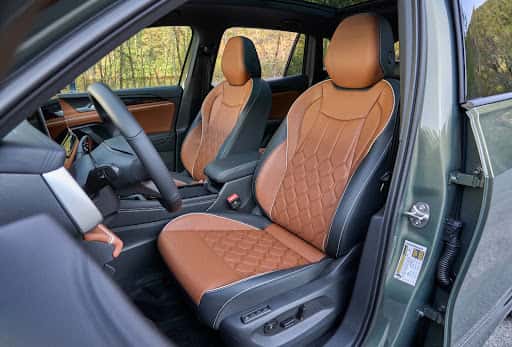
- Interior Space and Comfort: Both vehicles provide roomy two-row seating with ample legroom for the rear passengers. However, the VW Tiguan features a longer wheelbase that creates a more open, relaxed cabin environment with high-quality interior materials and supportive seating designed for long highway drives. The VW offers an impressive 103.8 cu-ft of passenger volume.
- Infotainment and Connectivity: The VW Tiguan offers an intuitive central touchscreen with standard wireless Apple CarPlay® and Android Auto™ integration, alongside a digital cockpit display that puts route navigation and vehicle stats right in front of the driver. The Honda CR-V offers similar smartphone integration, though base trims utilize a smaller touchscreen interface.
- Ride Quality and Handling: European chassis tuning gives the VW Tiguan a planted, composed feel through turns without sacrificing ride comfort over bumpy pavement. The Honda CR-V offers a comfortable, light steering feel that works well for city parking, but feels less planted at higher highway speeds.
Cargo Versatility for Weekend Trips
Regardless of where your trips take you, one thing that doesn’t change is the option for flexibility in the cargo. It is important to always have room for the unexpected.
The Honda CR-V provides up to 39.3 cubic feet of rear cargo space behind the second row, expanding to 76.5 cubic feet with the rear seats folded flat. The VW Tiguan delivers a competitive cargo area with up to 37.6 cubic feet behind the second row and up to 69.8 cubic feet total capacity when folded.
While the Honda CR-V holds a slight edge in absolute cubic feet, the VW Tiguan features a wide, low load floor and a tie-down system that makes loading bulky, heavy gear straightforward and practical.
Safety Features and Driver Assistance
Modern family vehicles need comprehensive driver-assistance systems to handle unpredictable traffic patterns. Both Volkswagen and Honda include standard safety suites across their model lineups.
Volkswagen equips the VW Tiguan with its IQ.DRIVE® package, which includes Travel Assist (semi-automated driving support), Front Assist (forward collision warning and autonomous emergency braking), Active Blind Spot Monitor, and Rear Traffic Alert.
Honda counters with its Honda Sensing® suite, offering similar features like adaptive cruise control and lane-keeping assist. Both systems receive top safety ratings, giving family drivers peace of mind during daily commutes.
Visiting Your Local Volkswagen Dealership in Albuquerque
When you are ready to evaluate a new crossover in person, taking a test drive over local roads is the best way to determine which driving dynamics fit your lifestyle.
Working with a dedicated Volkswagen dealership in Albuquerque gives you access to full vehicle inventories, certified brand specialists, and tailored finance or lease offers. You can check out the Tiguan lineup firsthand at Fiesta Volkswagen:
Fiesta Volkswagen
8201 Lomas Blvd, Albuquerque, NM 87110
The dealership is located conveniently on Lomas Boulevard, our showroom serves drivers from across the metro area, including Rio Rancho, Corrales, and Bernalillo. Our team can help you compare trim levels, evaluate your trade-in, and set up back-to-back test drives.
Frequently Asked Questions
Which crossover performs better at high elevation?
The VW Tiguan comes standard with a 2.0-liter turbocharged engine that maintains strong torque and power at high elevation. While the base Honda CR-V uses a smaller 1.5-liter turbo, its non-turbo hybrid models lose power as altitude increases.
What kind of warranty coverage comes with the VW Tiguan?
Every new Volkswagen Tiguan includes a 4-year or 50,000-mile (whichever comes first) bumper-to-bumper limited warranty, along with 2 years or 20,000 miles of Carefree Coverage scheduled maintenance visits at no additional cost.
Does the VW Tiguan offer all-wheel drive on all trims?
Yes, Volkswagen’s 4MOTION® all-wheel-drive system is available across the entire Tiguan trim lineup, allowing you to pair advanced traction control with your preferred feature package.
How does fuel economy compare between the VW Tiguan and Honda CR-V?
The Honda CR-V Hybrid offers higher city fuel economy ratings due to its electric powertrain. However, for highway commuting at regional speeds, the turbocharged VW Tiguan provides competitive fuel economy while delivering superior passing power and highway stability.
0 comment(s) so far on VW Tiguan vs. Honda CR-V: Which SUV Fits New Mexico Drivers Best?