




Assessing the Compact Segment: 2027 Honda Civic near Rio Rancho NM
The compact sedan market remains one of the most fiercely contested segments in the automotive world. Two names consistently dominate the conversation when searching for a compact sedan: the Volkswagen Jetta and the Honda Civic.
While both sedans have earned decades of loyalty, a closer look at the actual specifications, standard features, and total cost of ownership reveals that one clear winner emerges for drivers in the high desert of New Mexico.
When shopping for a reliable commuter car, many buyers automatically start their search by looking for a 2027 Honda Civic near Rio Rancho NM. It is a familiar option with a solid reputation for holding its resale value. However, sticking purely to habit can mean missing out on superior engineering, better cabin tech, and substantial cost savings.
As you cross-shop the options, comparing what you actually get out of the box from a premier VW dealership versus a local Honda lot changes the equation completely. While the Honda Civic relies heavily on its historic nameplate, the Volkswagen Jetta attacks the segment with standard turbocharged performance, richer standard technology packages, and an upscale European cabin environment that its Japanese competitor fails to match at a comparable price point.
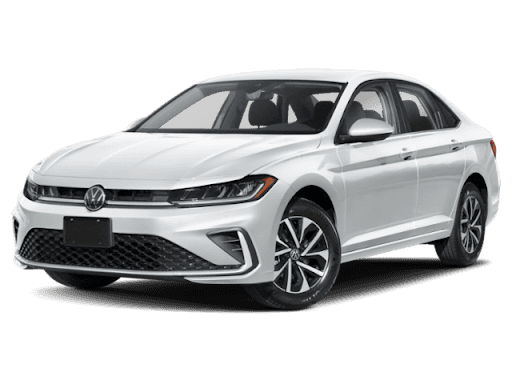
The Core Performance Advantage: Standard Turbocharged Torque
New Mexico’s high elevation changes how cars perform. At thousands of feet above sea level, the air is thinner, which robs traditional, naturally aspirated engines of their power. This is the first major area where the VW Jetta leaves the Honda Civic trailing behind.
The base Honda Civic features a standard 2.0-liter four-cylinder engine that relies entirely on natural aspiration. It produces a modest 150 horsepower and a meager 133 pound-feet of torque. Because it lacks forced induction, that power drops off even further when climbing the steep inclines around Rio Rancho. To get moving quickly, you have to stomp on the accelerator, forcing the noisy Continuously Variable Transmission (CVT) to scream at high RPMs.
In stark contrast, every single trim level of the Volkswagen Jetta comes standard with a highly advanced 1.5-liter TSI® turbocharged four-cylinder engine. While it makes a comparable 158 horsepower, the real magic is in the torque equation. The VW Jetta pumps out a robust 184 pound-feet of low-end torque starting at just 1,750 RPM. Because a turbocharger forces compressed air into the combustion chamber, it is virtually immune to high-altitude power loss.
Furthermore, instead of a rubbery-feeling CVT, Volkswagen pairs its turbo engine with a crisp, conventional eight-speed automatic transmission. This combination gives you immediate, confident throttle response when merging onto the highway or passing slow-moving commercial trucks.
Unmatched Safety and Industry Validation
Safety should never be treated as an optional upgrade. When you look at how these two manufacturers package their active driver-assistance systems, Volkswagen shows a clear commitment to protecting every driver from the moment they leave the showroom floor.
Volkswagen equips every VW Jetta model with its complete IQ.DRIVE® safety suite as standard equipment. This includes critical features like Active Blind Spot Monitor, Rear Traffic Alert, and Front Assist with Pedestrian Monitoring. Honda offers its Honda Sensing® suite, but to get a basic feature like a Blind Spot Information System or Rear Cross Traffic Monitor on a Civic, you are forced to bypass the base model and pay thousands extra for the upper trim levels.
This consumer-first packaging is exactly why Volkswagen models consistently earn elite industry praise. If you examine official automotive archives, specifically
Volkswagen Media Release 1927, you can see how Volkswagen’s focus on engineering integrity and standard safety architecture helped lock in its position as a Consumer Reports Recommended model. This independent, data-backed recommendation evaluates real-world track testing, predicted reliability, and owner satisfaction, areas where Volkswagen consistently excels.
Interior Dimensions and Daily Cabin Comfort
Compact sedans are often known for having cramped back seats. If you regularly carry adult passengers or need to install bulky rear-facing child safety seats, cabin packaging is a crucial metric.
The VW Jetta utilizes its exterior footprint far more efficiently than the Honda Civic. Due to its intelligent cabin geometry, the Jetta provides superior rear seat room, offering up to 51.4 inches of rear hip room and 37.2 inches of rear headroom. The Honda Civic feels visibly narrower and tighter in the back row, dropping down to just 48.9 inches of rear hip room and 37.1 inches of rear headroom.
Daily convenience features also favor the German sedan:
- Standard Gauge Cluster: The VW Jetta comes out of the gate with an 8-inch fully digital VW Digital Cockpit display, whereas the base Honda Civic restricts you to a smaller 7-inch driver information screen.
- Infotainment Screens: Volkswagen includes a crisp 8-inch central touchscreen as standard equipment. The base Honda Civic cuts corners with a tiny 7-inch display.
- Premium Upgrades: Step up to the top-tier VW Jetta SEL, and you are treated to genuine leather upholstery alongside heated and ventilated front seats. If you look at the top-of-the-line Honda Civic, you are completely out of luck if you want ventilated seats, as Honda only offers heating elements.
Total Cost of Ownership and Carefree Coverage
The final nail in the comparison comes down to your wallet, both at the initial purchase and over the first few years of ownership.
The Volkswagen Jetta carries a lower starting manufacturer’s suggested retail price (MSRP) than the Honda Civic across equivalent trim levels. You are essentially paying a premium for the Honda Civic just to receive less torque, smaller digital screens, and fewer standard safety features.
Beyond the initial savings at the dealership, Volkswagen includes its signature Carefree Coverage suite with every new VW Jetta. This package provides a 4-year or 50,000-mile bumper-to-bumper limited warranty, alongside 2 years or 20,000 miles of complimentary scheduled maintenance. When you buy a Honda Civic, your out-of-pocket costs begin on day one for basic oil changes and fluid services.
If you are currently cross-shopping a 2027 Honda Civic near Rio Rancho NM, doing a direct feature-for-feature comparison reveals that the VW Jetta simply provides a faster, safer, larger, and more affordable package overall.
Experience the Winner at Fiesta Volkswagen
Reading about the differences is one thing, but feeling the immediate surge of turbocharged torque and experiencing the quiet, refined European cabin insulation is another.
When you are ready to see why the VW Jetta outclasses the competition, make the short drive to Fiesta Volkswagen, located at 8201 Lomas Blvd, Albuquerque, NM 87110. Our knowledgeable team can walk you through our extensive inventory, line up a side-by-side comparison, and help you find the exact trim level that perfectly fits your budget and lifestyle.
Frequently Asked Questions (FAQ)
Is the VW Jetta or Honda Civic better for driving in high altitudes?
The VW Jetta is significantly better for high-altitude environments like Rio Rancho. Because the Jetta comes standard with a turbocharged engine, it uses forced induction to maintain power in thin air. The base Honda Civic uses a naturally aspirated engine, which loses roughly 3% of its power for every 1,000 feet of elevation gain, making it feel sluggish on local mountain roads.
How do the warranties compare between the VW Jetta and the Honda Civic?
Volkswagen offers a robust 4-year or 50,000-mile limited warranty that covers the powertrain and components. Honda limits its bumper-to-bumper coverage to 3 years or 36,000 miles. Furthermore, Volkswagen provides 2 years or 20,000 miles of completely free scheduled maintenance, a perk you will not get with a standard Honda purchase.
Does the Volkswagen Jetta require premium gas because of the turbocharger?
No. Despite featuring a highly sophisticated turbocharger that provides excellent acceleration and low-end torque, the Jetta engine is fully optimized to run safely and efficiently on standard 87-octane regular unleaded fuel, keeping your operating costs low.
Which car has a larger trunk for cargo?
Both vehicles are highly competitive in trunk space, offering roughly 14 cubic feet of cargo capacity. However, the VW Jetta features a wider trunk opening and standard 60/40 split-folding rear seats across the lineup, making it much easier to load awkwardly shaped items like track gear, strollers, or groceries. Making it a leader in our opinion.
0 comment(s) so far on Assessing the Compact Segment: 2027 Honda Civic near Rio Rancho NM